Scroll to drive the junction
APEX GT
A scarlet concept machine enters the intersection, cuts through the light, and turns the city into a launch corridor.
The Machine
Built as a night-running instrument.
A low, precise coupe shaped around air, glare, and restraint. The numbers are fictional, but the attitude is specific: immediate, compact, and tuned for the first clean exit from the junction.
Scroll to disassemble
The heart, unpacked.
A naturally-aspirated V8 breaks into an ordered exploded view — every plenum, cam cover, manifold and pulley separating in synchronized, weightless motion.
Parallax pressure map
Air moves first. The body follows.
A layered cutaway turns airflow into a scroll-driven instrument: red wake, white pressure lines, and body planes drifting at separate speeds.
Layered parallax bodywork
Scroll-driven pressure trace
Signal sequence
Telemetry becomes composition.
The page stops being a spec sheet and starts behaving like a control surface: bars stretch, route marks sweep, and the final pulse locks before the 3D corridor opens.
Open the throttle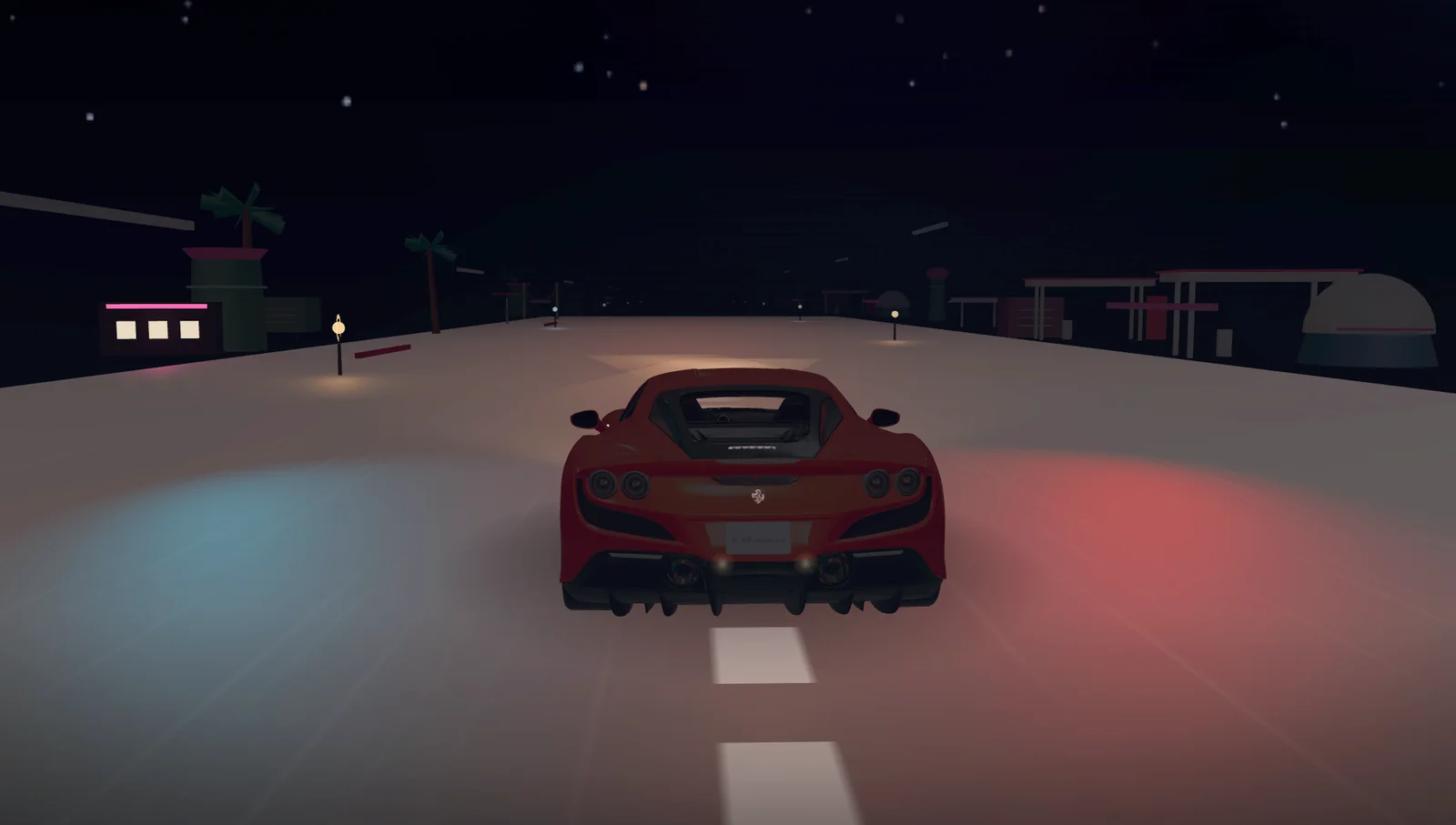
Spinning up the corridor
Night drive module
Scroll to open the throttle
Endless night corridor.
The machine holds its line while the city streams past — wet asphalt below, neon rails overhead. Push scroll to build speed.
Design / Craft
The body reads like a reflection before it reads like metal.
APEX GT is framed in the city at night because every surface becomes visible under pressure: wet asphalt below, signal light above, glass towers passing across the shoulder line.
The cabin is imagined as a dark technical room with tactile switches, matte carbon, and a single red datum line that tracks the driver from entry to exit. Nothing ornamental, nothing asleep.
Close
Hold the line through the turn.
A cinematic static showcase for a fictional performance object, built around scroll-synced frame sequencing, local image assets, and a final run that keeps the page moving until the last frame.
Run the final passScroll the launch
Let the rear step out.
The run starts straight, then opens into a wide left-right slide as the camera stays low behind the car.